 Millets
- Botanical
- Setaria italica
- HS code
- 1008 29
Grade, origin, pack and MOQ come on the specification we send with each quotation.
Setaria italicaKangni
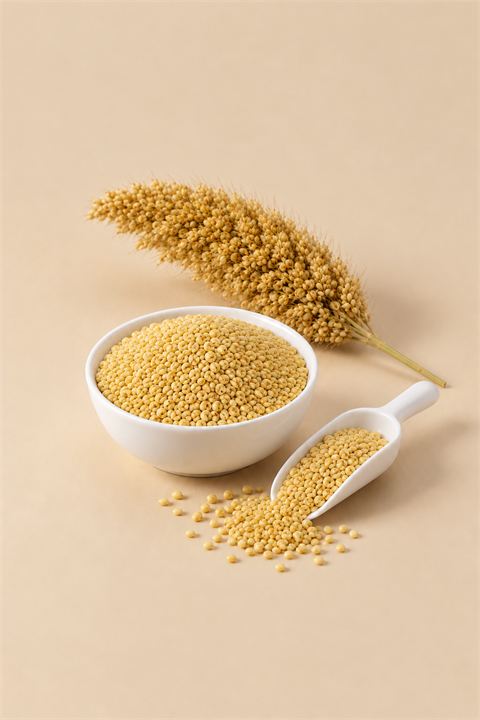
Foxtail millet, kangni in Hindi, is a small, pale whole grain that cooks like rice. Buyers stock it for kitchens and food manufacturers that want a millet to use in place of rice in everyday and ready-to-cook dishes.
MilletsGrade, origin, pack and MOQ come on the specification we send with each quotation.
Agreed with you for each order, against your market's rules. These are the parameters it covers; you set the values, and they come back with the quotation.
Export bags or cartons. Our brand packs, plain export packs or your own label: pack formats to follow.
Foxtail millet comes from a processor we select and check. Their certificates for this product are named as theirs: processor's certificates to follow.
The set is confirmed for your destination before we quote.
Importers buy foxtail millet for retail packing, food manufacturers for ready-to-cook packs, flakes and snacks, and foodservice buyers as a rice-style grain.
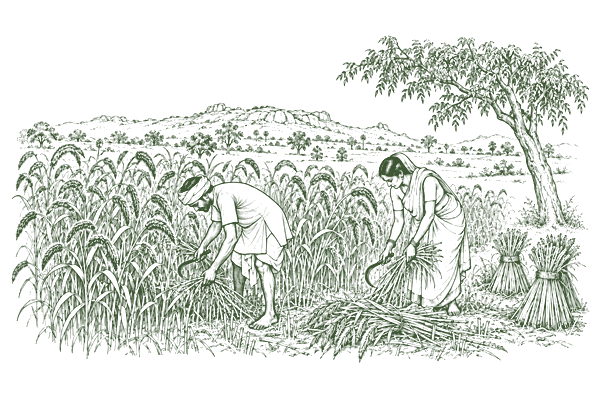
tied in small sheaves
Foxtail millet is one of the oldest cultivated grains. It was first domesticated in northern China and has long been grown in India, where it is known as kangni, navane, korra or thinai. It is grown in several states, including Andhra Pradesh, Karnataka, Telangana, Tamil Nadu and Rajasthan. The name comes from its bushy, drooping seed head. The origin of each lot is stated in its specification.
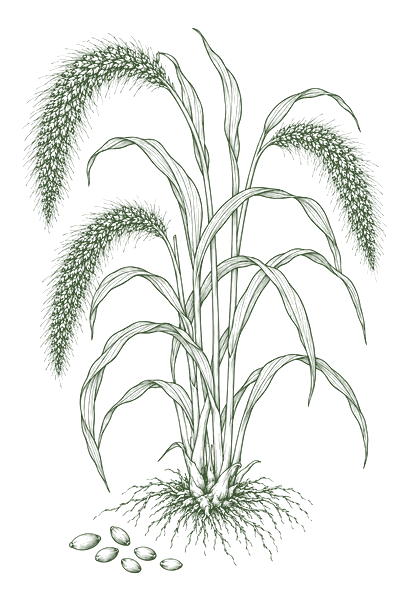
the bushy tail that names it
Each grain is small and oval, inside a husk that must be removed before cooking. Hulled foxtail millet is pale yellow, with a mild, slightly nutty taste. Form supplied: hulled or unhulled, polished or unpolished. It cooks into separate, fluffy grains, a little like broken rice, and also mills into a light flour.
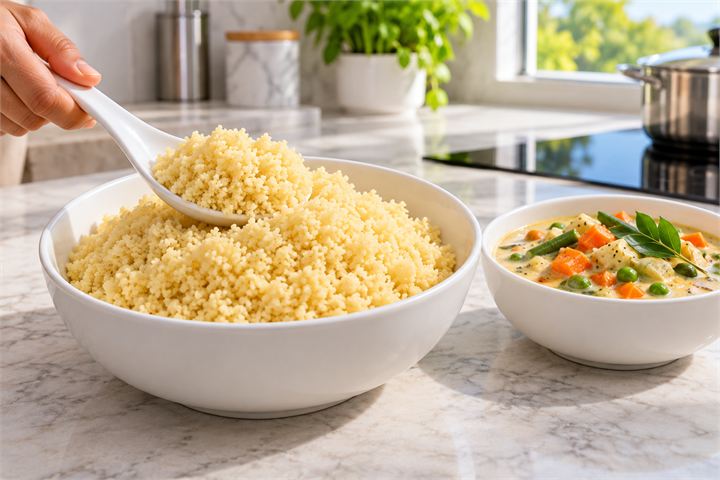
fluffed, every grain separate
In south India, foxtail millet is cooked like rice and served with sambar, curries and curd. It is made into upma, pongal, khichdi, lemon rice and payasam, a sweet milk pudding, and its batter is used for idli and dosa. Kitchens elsewhere use it in pilafs, salads and grain bowls.
Food manufacturers use foxtail millet in ready-to-cook rice-style packs, instant upma and pongal mixes, flakes, pasta, noodles and puffed snacks. Its flour goes into biscuits and multigrain bakery flours. Because it cooks much like rice, it suits products that offer a millet version of a familiar rice dish.
MilletsGrade, origin, pack and MOQ come on the specification we send with each quotation.
MilletsGrade, origin, pack and MOQ come on the specification we send with each quotation.
MilletsGrade, origin, pack and MOQ come on the specification we send with each quotation.
Tell us what you need, where it is going and roughly how much. One of the directors replies with a specification and a quotation on your terms.