Who makes it, and how each lot is checked.
We trade, so every product comes from a processor we select. Here is how we choose them, what is agreed for each order, what is checked before a lot ships, and whose each certificate is.
How we choose processors
We trade, so the processor matters more than anything we say. What we look for in a processor:
- a valid FSSAI licence and a recognised food-safety certification
- hygiene standards that their own certification audits
- checks on the raw material they take in
- each lot traceable back to that raw material
- grading and packing to a specification agreed per order
- certificates and test reports they will share with you
The criteria as the directors apply them, and which certificates each processor holds: confirm the processor criteria, and the certificates each processor holds, per product
The specification, agreed per order
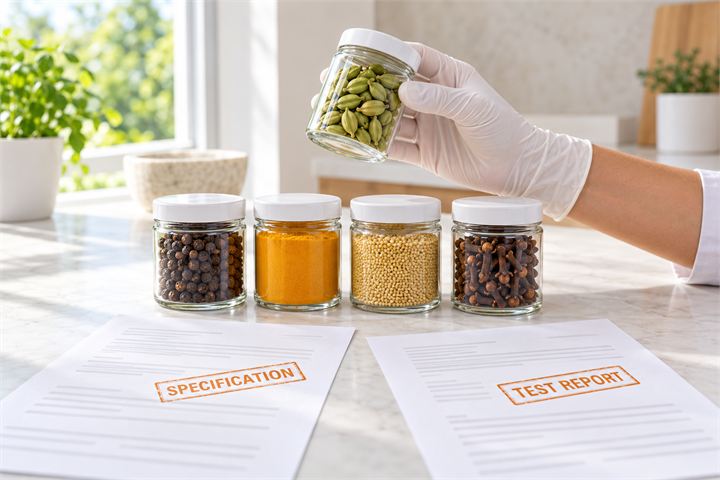
Every order starts from a written specification, agreed with you before we quote. It covers the grade, the origin of the lot, moisture and the other parameters that matter for the product, the pack, the carton marking and the storage conditions. Packaging is part of it: liners for powders, cartons for frozen lines, and the labelling your market requires. The processor works to it, and the sample you approve is the reference for the lot.
Checks before dispatch
Before a lot ships, it is checked against the agreed specification. who checks each lot before dispatch For spices and powders, buyers ask first about pesticide residues and ethylene oxide. Lots can be tested for both against your specification, and for moisture, aflatoxin, microbiology or anything else your market requires. How each lot is numbered and traced to the processor's batch records: lot numbering and traceability, per processor
Documents with each shipment
Each shipment goes with its paperwork:
- Commercial invoice and packing list
- Certificate of origin, giving the origin of the lot
- Test reports for the lot, where tests were agreed
- The processor's certificates, on request
- Phytosanitary or health certificates, where required
Tell us what your auditor needs to see, and we confirm the document set before we quote.
Frozen lots, kept frozen
Unix frozen lines are made and frozen by the processor and held in its cold store at −18 °C or below. We arrange the reefer, set to −18 °C, and the move to the port, and we verify the temperature at each hand-over. how the temperature is verified at each hand-over We do not own cold stores or reefers. Ambient lots have their storage conditions, cool and dry, written into their specification.
Whose each certificate is
The company holds two registrations of its own. Every other certificate on this site belongs to the processor that holds it, and we name it as theirs, on the product page and in the documents. If a certificate is not listed, we do not claim it.
- FSSAI licence
- 11526996001066 (Central License)Food Safety and Standards Authority of India. The company's own registration.
- IEC
- AABCU8338HImporter-Exporter Code, issued by India's Directorate General of Foreign Trade. The company's own registration.
- Processors' certificates
- Named as theirsListed on each product page as the processor's, and shared on request.
Request a quote.
Tell us what you need, where it is going and roughly how much. One of the directors replies with a specification and a quotation on your terms.