 Millets
- Botanical
- Paspalum scrobiculatum
Grade, origin, pack and MOQ come on the specification we send with each quotation.
Paspalum scrobiculatumKodon
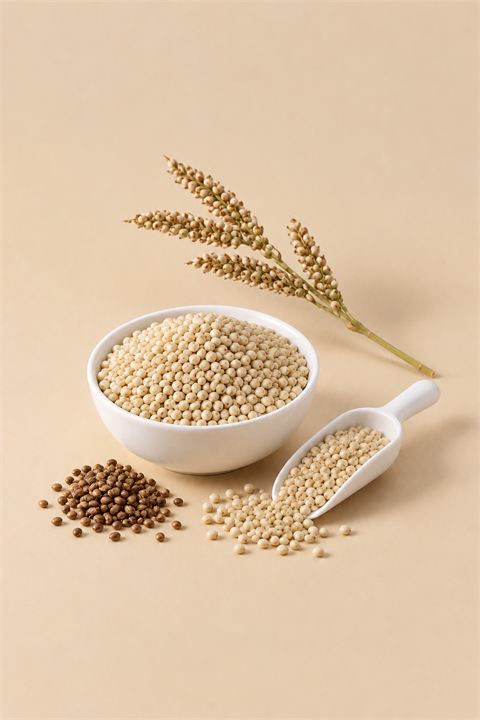
Kodo millet, kodon in Hindi, is a small whole grain from central and south India with a firm bite and a mild, earthy taste. Buyers stock it for kitchens and food manufacturers that want a millet with more texture to use like rice.
MilletsGrade, origin, pack and MOQ come on the specification we send with each quotation.
Agreed with you for each order, against your market's rules. These are the parameters it covers; you set the values, and they come back with the quotation.
Export bags or cartons. Our brand packs, plain export packs or your own label: pack formats to follow.
Kodo millet comes from a processor we select and check. Their certificates for this product are named as theirs: processor's certificates to follow.
The set is confirmed for your destination before we quote.
Importers buy kodo millet for retail packing, and food manufacturers and foodservice buyers use it in grain packs, breakfast mixes and rice-style dishes.
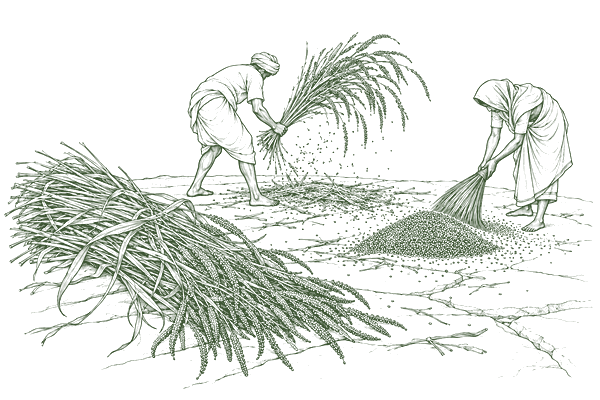
swept into a heap
Kodo millet was domesticated in India and has been grown here since ancient times. It is grown mainly in Madhya Pradesh and Chhattisgarh, and also in Tamil Nadu, Karnataka and Odisha, usually rain-fed and on poor soils. It is called kodon in central India and varagu in Tamil Nadu. The origin of each lot is stated in its specification.
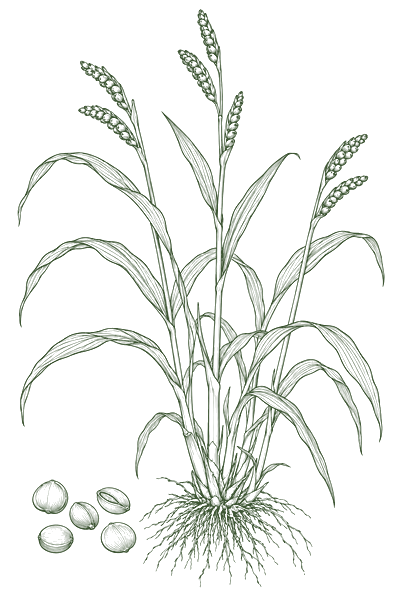
short spikes, round spikelets
Kodo grains are small and oval, inside a hard, dark husk that has to be removed before the grain is used for food. Hulled kodo is light brown to cream. Form supplied: hulled or unhulled, polished or unpolished. It cooks into firm, separate grains with more bite than foxtail or little millet.
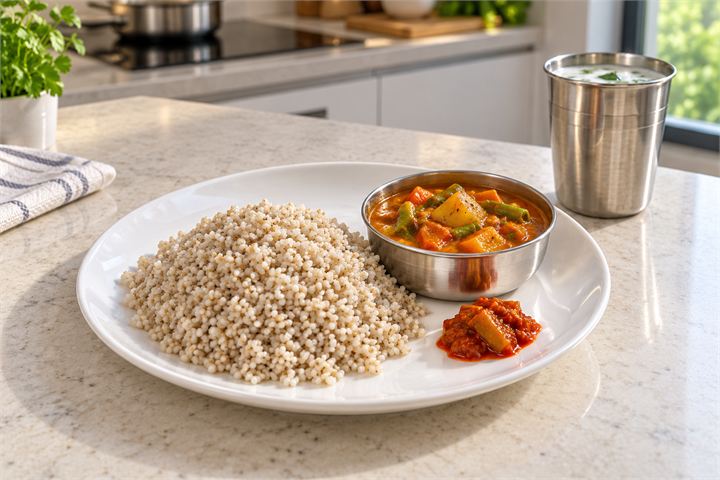
a tumbler of buttermilk behind
In central India, kodo is cooked as a plain grain or a thin porridge and eaten with dal, buttermilk or vegetables. In Tamil Nadu, varagu is made into pongal, upma, idli, dosa and a sweet pudding. Its firm texture suits pilafs, grain salads and stuffings in kitchens elsewhere.
Food manufacturers use kodo millet in ready-to-cook grain packs, instant pongal and upma mixes, flakes, noodles and extruded snacks. Broken kodo goes into porridge and breakfast mixes, and the flour into biscuits and multigrain bakery blends. It is also sold as a plain grain for cooking at home.
MilletsGrade, origin, pack and MOQ come on the specification we send with each quotation.
MilletsGrade, origin, pack and MOQ come on the specification we send with each quotation.
MilletsGrade, origin, pack and MOQ come on the specification we send with each quotation.
Tell us what you need, where it is going and roughly how much. One of the directors replies with a specification and a quotation on your terms.