 Millets
- Botanical
- Eleusine coracana
Grade, origin, pack and MOQ come on the specification we send with each quotation.
Eleusine coracanaRagi, nachni
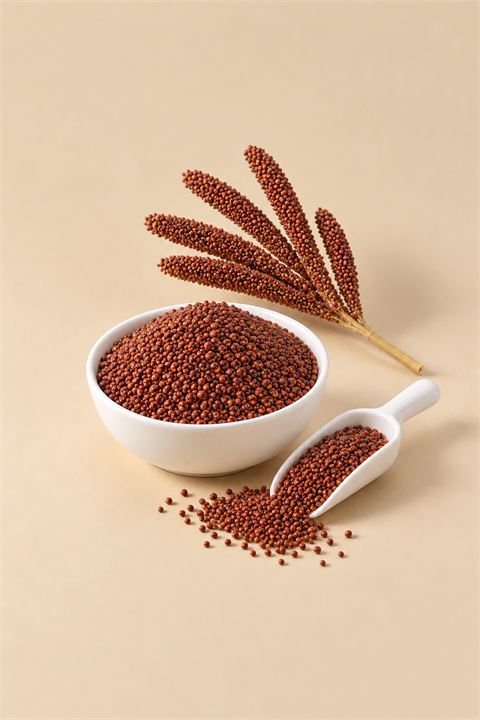
Ragi is finger millet, a very small, reddish-brown whole grain grown mainly in south India. Buyers stock it for its flour and malt, which give biscuits, porridges and drink mixes a brown colour and an earthy taste.
MilletsGrade, origin, pack and MOQ come on the specification we send with each quotation.
Agreed with you for each order, against your market's rules. These are the parameters it covers; you set the values, and they come back with the quotation.
Export bags or cartons. Our brand packs, plain export packs or your own label: pack formats to follow.
Ragi (finger millet) comes from a processor we select and check. Their certificates for this product are named as theirs: processor's certificates to follow.
The set is confirmed for your destination before we quote.
Importers buy ragi for retail packing, and millers, bakers and drink-mix makers buy it for flour, malt, biscuits and breakfast cereals.
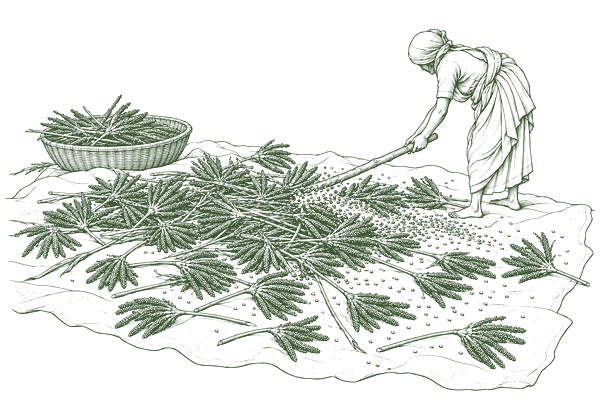
spread on cloth, beaten gently
Finger millet was first domesticated in the highlands of East Africa and has been grown in India since ancient times. In India it is grown mainly in Karnataka, and also in Tamil Nadu, Uttarakhand, Maharashtra and Odisha. The name comes from the seed head, which splits into several spikes like the fingers of a hand. The origin of each lot is stated in its specification.
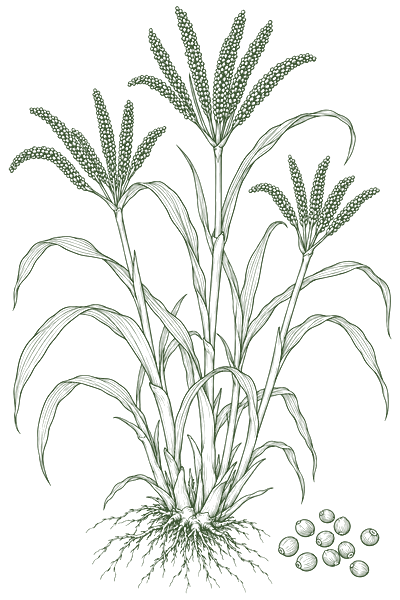
the fingers that name it
Ragi grains are tiny and round, about the size of a mustard seed. Most are reddish brown, though white varieties exist. Variety and colour of the lot: variety and colour supplied. The grain is rarely cooked whole; it is ground into a fine brown flour with an earthy, slightly sweet taste. Sprouted, dried and then milled, it becomes malted ragi.
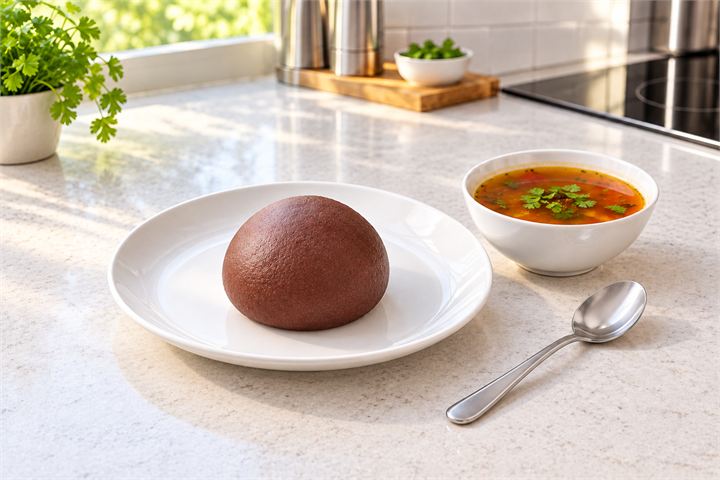
dark as cocoa dough
In Karnataka, ragi flour is cooked with water into ragi mudde, firm balls eaten with spicy curries. It is also made into rotti, thin dosas and porridge, and malted ragi is mixed with milk as a warm drink. In home and restaurant kitchens it now goes into pancakes, cakes, cookies and bread.
Food manufacturers use ragi flour and malted ragi in biscuits, cookies, crackers, noodles, pasta, breakfast cereals and malted drink mixes. Ragi also goes into multigrain flours and ready-to-cook dosa and porridge mixes. Its brown colour shows clearly in the finished product.
MilletsGrade, origin, pack and MOQ come on the specification we send with each quotation.
MilletsGrade, origin, pack and MOQ come on the specification we send with each quotation.
MilletsGrade, origin, pack and MOQ come on the specification we send with each quotation.
Tell us what you need, where it is going and roughly how much. One of the directors replies with a specification and a quotation on your terms.