 Millets
- Botanical
- Sorghum bicolor
Grade, origin, pack and MOQ come on the specification we send with each quotation.
Sorghum bicolorJowar
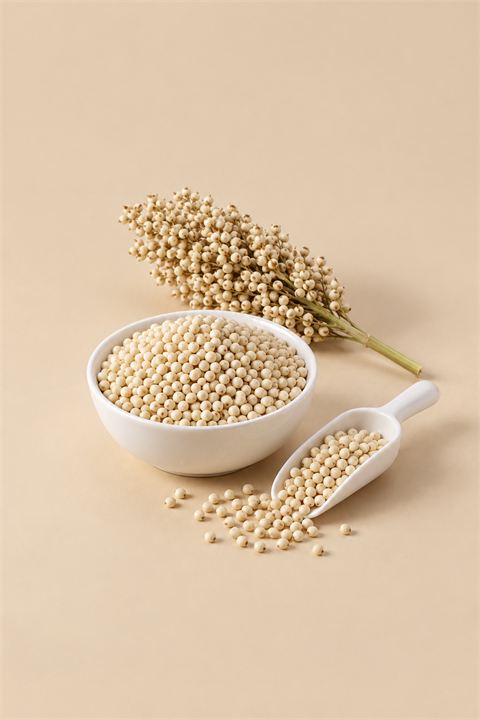
Jowar is sorghum, a whole grain eaten every day in much of western and southern India. Buyers stock it as a mild grain that can be sold whole, or milled, flaked or popped for flour, breakfast cereals and snacks.
MilletsGrade, origin, pack and MOQ come on the specification we send with each quotation.
Agreed with you for each order, against your market's rules. These are the parameters it covers; you set the values, and they come back with the quotation.
Export bags or cartons. Our brand packs, plain export packs or your own label: pack formats to follow.
Jowar (sorghum) comes from a processor we select and check. Their certificates for this product are named as theirs: processor's certificates to follow.
The set is confirmed for your destination before we quote.
Importers buy jowar for retail packing, millers and food manufacturers for flour, flakes and snacks, and foodservice buyers for flatbreads and grain dishes.
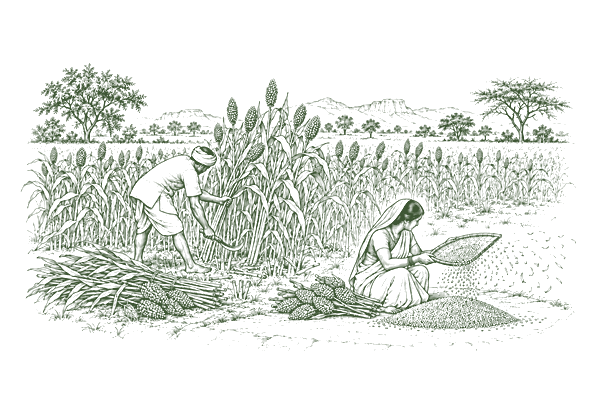
the chaff drifts away
Sorghum was first domesticated in Africa and reached India in ancient times. In India it is grown mainly in Maharashtra and Karnataka, and also in Telangana, Madhya Pradesh and Rajasthan, often as a winter crop on soils that hold the monsoon's moisture. It needs little irrigation. The origin of each lot is stated in its specification.
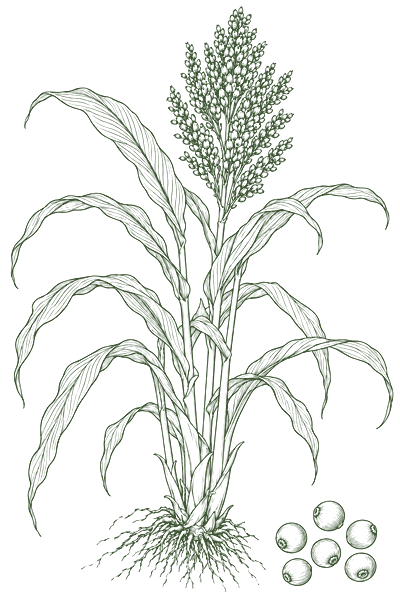
the full head of grain
Jowar grains are round and larger than those of most millets. Food varieties are mostly creamy white, though some are yellow or red. Variety and colour of the lot: variety and colour supplied. The flavour is mild and slightly sweet. Cooked whole, the grain stays chewy; milled, it gives a soft, pale flour.
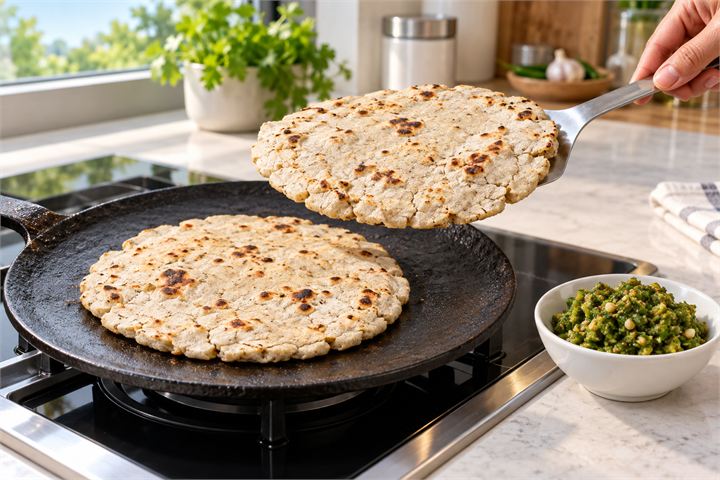
straight off the tawa
In Maharashtra and north Karnataka, jowar flour is made into bhakri, a thick flatbread patted out by hand and cooked on a flat griddle, and eaten with vegetables, dal and chutneys. The whole grain is also cooked like rice, simmered into porridge, or popped like small popcorn. Kitchens elsewhere use it in grain bowls, salads and soups.
Food manufacturers mill jowar into flour for flatbreads, biscuits, crackers and blended bakery flours. The grain is also flaked for breakfast cereals, puffed or popped for snacks, and used in pasta and noodle blends. Its mild flavour lets other ingredients come through, so it is often a base grain in multigrain products.
MilletsGrade, origin, pack and MOQ come on the specification we send with each quotation.
MilletsGrade, origin, pack and MOQ come on the specification we send with each quotation.
MilletsGrade, origin, pack and MOQ come on the specification we send with each quotation.
Tell us what you need, where it is going and roughly how much. One of the directors replies with a specification and a quotation on your terms.