 Millets
- Shelf
- Millets
Grade, origin, pack and MOQ come on the specification we send with each quotation.
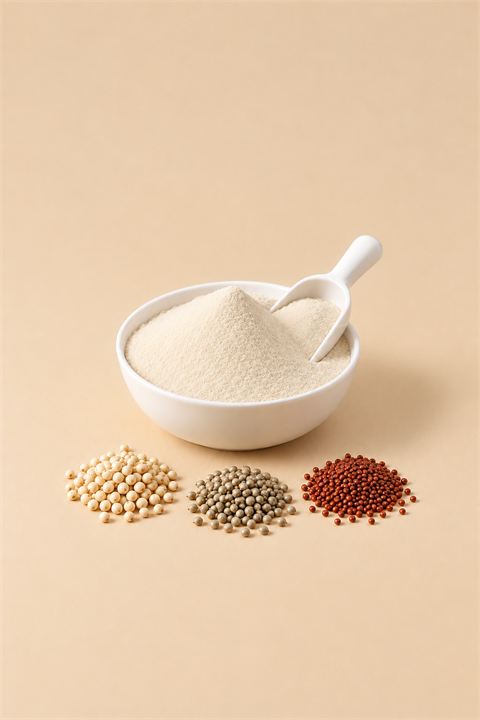
Millet flour is ground from millet grains by the processor. Buyers stock it for bakers, food manufacturers and kitchens that want a millet flour ready to use in flatbreads, baking and ready-to-cook mixes.
MilletsGrade, origin, pack and MOQ come on the specification we send with each quotation.
Agreed with you for each order, against your market's rules. These are the parameters it covers; you set the values, and they come back with the quotation. Values marked “to confirm” are provisional until a quotation confirms them.
Export bags or cartons. Our brand packs, plain export packs or your own label: pack formats to follow.
Millet flour comes from a processor we select and check. Their certificates for this product are named as theirs: processor's certificates to follow.
The set is confirmed for your destination before we quote.
Importers buy millet flour for retail packing, and bakers, food manufacturers and foodservice buyers use it for flatbreads, bakery products and ready-to-cook mixes.
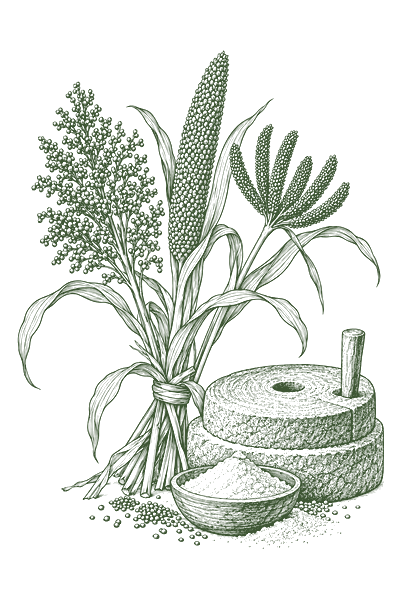
three heads, one bundle
Millet flour can be milled from a single grain, such as jowar, bajra or ragi, or from several grains together. The grain decides the flour's colour and taste and how it behaves in a dough, so buyers usually specify it. Grains this flour is milled from: confirm the grains: single-grain jowar, bajra and ragi flours, or a blend.
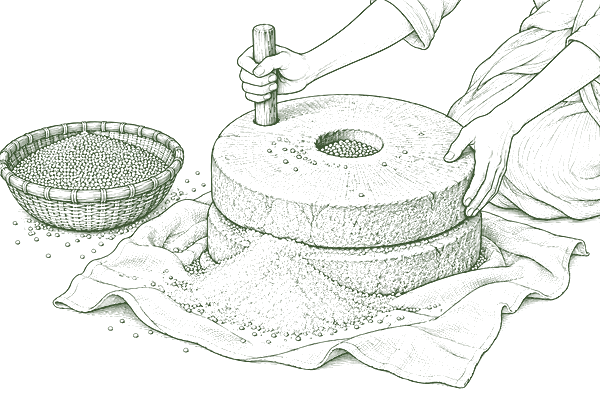
the flour gathers on the cloth
The processor cleans the grain, removes the husk where the grain has one, then mills and sieves it. Buyers usually specify fineness, colour and moisture, and ask for test reports for pesticide residues, mycotoxins and microbiology. Millet flour keeps less well than the whole grain, so storage and shelf life are stated in its specification. The processor's certificates for this product: processor's certificates.
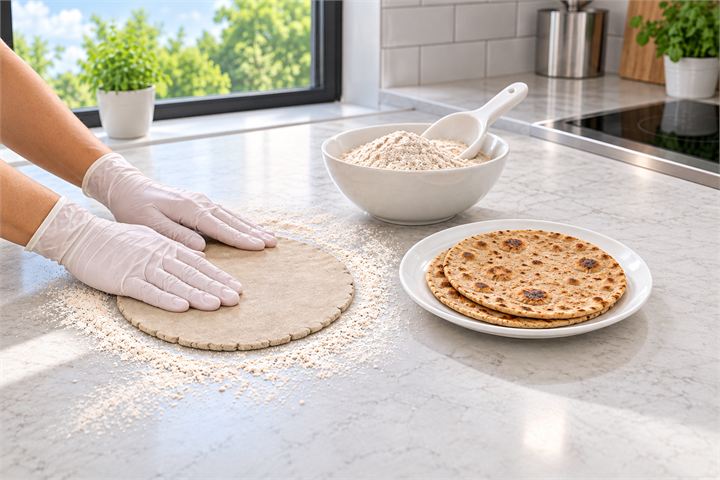
patted flat by hand
In India, millet flours are made into flatbreads such as bhakri, rotla and rotti, cooked on a griddle, and into dosa and pancake batters, porridges and sweets. Kitchens elsewhere use millet flour in pancakes, muffins and quick breads, and as part of the flour in bread, cakes and cookies.
Food manufacturers use millet flour in biscuits, crackers, cookies, pasta, noodles, snack bars and extruded snacks, and blend it with wheat or other flours in bakery mixes. It is also a base for ready-to-cook mixes, such as dosa, pancake and flatbread mixes, where the millet gives the product its colour and taste.
MilletsGrade, origin, pack and MOQ come on the specification we send with each quotation.
MilletsGrade, origin, pack and MOQ come on the specification we send with each quotation.
MilletsGrade, origin, pack and MOQ come on the specification we send with each quotation.
Tell us what you need, where it is going and roughly how much. One of the directors replies with a specification and a quotation on your terms.