 Pure & Natural
- Botanical
- Zingiber officinale
Grade, origin, pack and MOQ come on the specification we send with each quotation.
Zingiber officinaleSonth
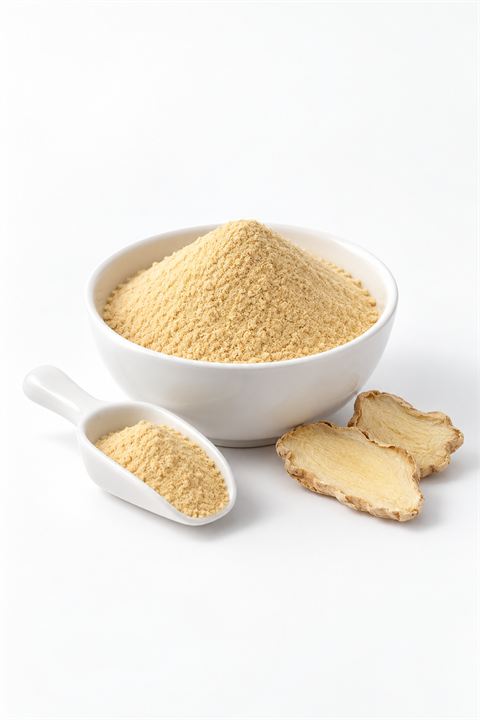
Ginger powder is ground from dried ginger, known in Hindi as saunth, and has a warm, sharp taste with a pungent finish. Buyers stock it for baking, spice blends, sauces and tea, where dried ginger is easier to measure and store than fresh.
Pure & NaturalGrade, origin, pack and MOQ come on the specification we send with each quotation.
Agreed with you for each order, against your market's rules. These are the parameters it covers; you set the values, and they come back with the quotation. Values marked “to confirm” are provisional until a quotation confirms them.
Export bags or cartons. Our brand packs, plain export packs or your own label: pack formats to follow.
Ginger powder comes from a processor we select and check. Their certificates for this product are named as theirs: processor's certificates to follow.
The set is confirmed for your destination before we quote.
Importers buy ginger powder for retail packing, bakers and spice blenders for baking and blends, and food and drink manufacturers for sauces, confectionery and tea blends.
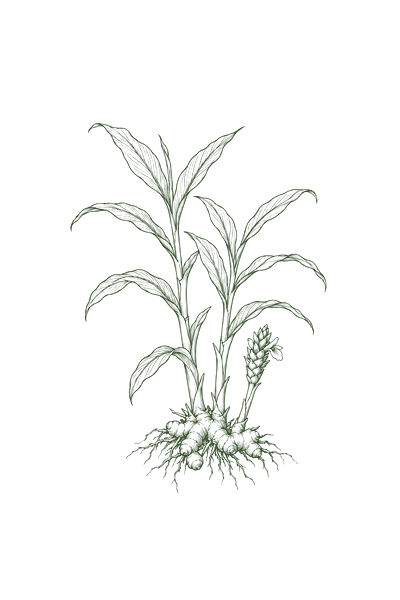
the knobbly ginger root
Ginger is a tropical plant grown for its rhizome, the underground stem sold as ginger root. In India it is grown in many states, including Karnataka, Assam, Meghalaya, Odisha and Kerala, and Kerala has long been known for its dried ginger. Ginger for drying is harvested when fully mature, when its flavour is strongest. The origin of each lot is stated in its specification.
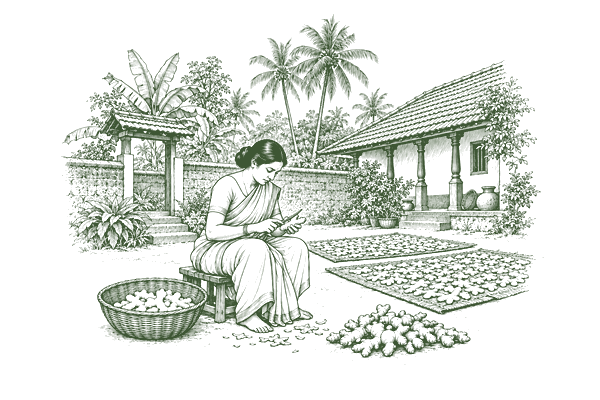
scraped with a bamboo sliver
After harvest, the rhizomes are washed, peeled or scraped, and dried in the sun until hard. The processor cleans the dried ginger, grinds it and sieves the powder. Like every powder in the Pure & Natural range, it is a single-ingredient powder.
pale cream-yellow, finely ground
Buyers usually specify colour, aroma, pungency, volatile oil content, moisture and mesh size. Ground ginger loses aroma over time, so packing matters. They ask for test reports for pesticide residues, ethylene oxide, aflatoxin and microbiology. The processor's certificates for this product: processor's certificates.
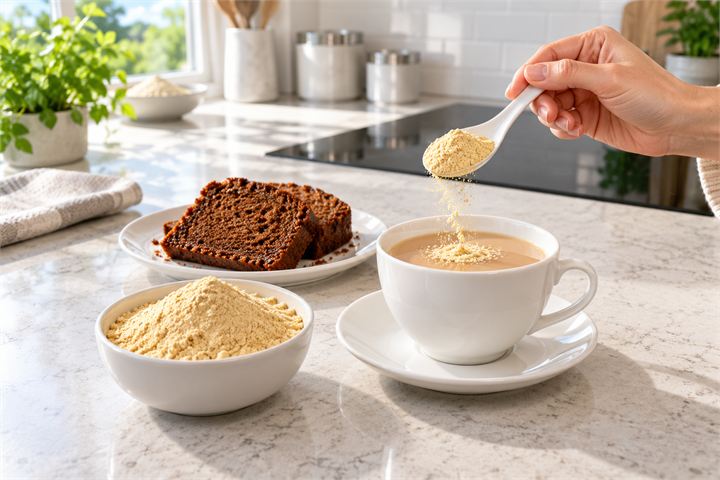
a spoonful into the tea
Ground ginger flavours gingerbread, biscuits, cakes and puddings, and spice blends for curries, marinades and baking. Food manufacturers use it in sauces, soups, pickles, confectionery and ready meals, and drink makers use it in tea blends and spiced drinks. It has a warmer, deeper taste than fresh ginger.
Pure & NaturalGrade, origin, pack and MOQ come on the specification we send with each quotation.
Pure & NaturalGrade, origin, pack and MOQ come on the specification we send with each quotation.
Pure & NaturalGrade, origin, pack and MOQ come on the specification we send with each quotation.
Tell us what you need, where it is going and roughly how much. One of the directors replies with a specification and a quotation on your terms.